
NO 11B, JALAN PUCHONG PERMAI 2, TAMAN PUCHONG PERMAI,
47100, PUCHONG, SELANGOR
+603 5892 6806
Excellent Expertise, Proven Professionals
Magnetic particle inspection is an inspection method used to identify defects on the surface of ferromagnetic materials by running a magnetic current through it. It can also be used to detect defects just beneath the surface of materials. The types of defects it can detect include cracks, pores, cold lap, and the lack of sidewall fusion in welds.
MONDIAL's offers a full range of magnetic particle testing products to help you identify surface and subsurface discontinuities in ferromagnetic materials. We offer a wide variety of consumables designed for magnetic particle inspection testing, including fluorescent and visible magnetic particles, carrier liquids, and contrast paints
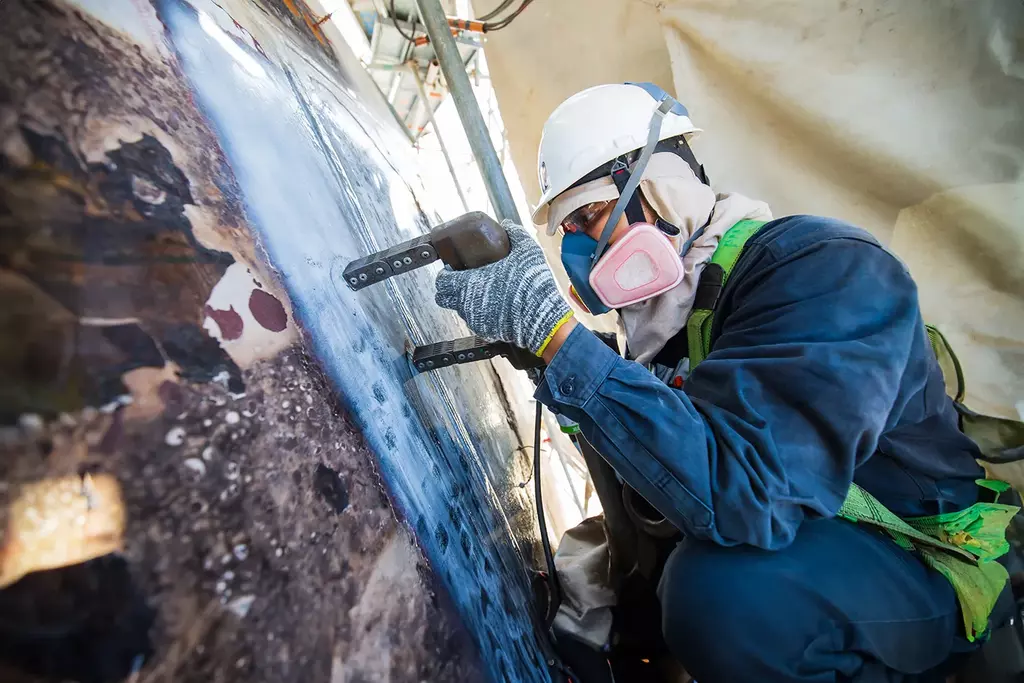
MONDIAL's is capable of carrying out magnetic particle inspection on welded items, new components, raw material and others which made up of a ferromagnetic material such as iron, nickel, cobalt, or some of their alloys. The testing include of inspection on welded pipeline, pressure vessels, completed machining items and etc.
MONDIAL's offers Magnetic Particle Inspection for almost all industries that use ferromagnetic materials as their products such as structural steel, automotive, petrochemical, power generation, and aerospace industries.
The advantages of Magnetic Particle Inspection include:
The Pros & Cons
Magnetic particle testing is quick and fairly inexpensive, but it does have some limitations. Here’s a list of pros and cons for MPI:
Pros
- It is very portable and quick
- Results of the test immediately visible on the surface of the material
- No strict pre-cleaning regiment is required and post-cleaning can also generally be avoided
- Generally inexpensive, and does not need a stringent pre-cleaning
- Sensitive—it can detect shallow/fine cracks in a surface
- Can detect both surface and near-surface indications.
- Easy to use, without a lot of training required
- Flexibility—it can be used with strangely shaped objects, even on surfaces that have other materials on them
- Can inspect parts with irregular shapes (external splines, crankshafts, connecting rods, etc.)
Cons
- Only ferromagnetic material can be tested with MPI
- Only surface and subsurface (to a depth of about 0.100" in most conditions) defects can be detected
- After the test is complete the material has to be demagnetized, which can pose challenges
- Inspectors must achieve an alignment between indications and magnetic flux
- Only small sections of a surface can be examined at one time
- Paint must be removed if it is thicker than about 0.005" for MPI to work
Upholds the highest standards of quality assurance for NDT services.
FAQ
Magnetic particle testing is an NDT method used to detect surface and slightly subsurface flaws in ferromagnetic materials such as iron, nickel, and cobalt.
Only metal substances can be tested using this the magnetic particle NDT method.
The product being tested is magnetised to produce magnetic lines of force in the material. Flaws are detected when these lines of force meet a discontinuity.
Magnetic particle testing is a quick and relatively easy NDT technique widely used in many industry sectors such as aerospace, automotive, petrochemical, structural steel, and power generation. It gives an immediate indication of defects and discontinuities in materials such as iron and steel.